

Terracotta Warriors and Horses & Lishan Garden One-day tour
1 DayAfter arriving in Lintong by bus in the morning, first go to Lishan Garden (about 1 hour and 30 minutes to visit). This trip is to visit the "bronze crown" Qin bronze chariots and horses. Bronze chariots and horses are one of the funerary objects of Qin Shihuang, symbolizing a part of Qin Shihuang's driving. The two cars were mainly made of bronze, and were equipped with a large number of gold and silver ornaments. The whole car, horse and people were copied at that time according to the size of the car belonging to Qin Shihuang's royal motorcade, which vividly reproduced the whole picture of Qin Shihuang's royal carriage. According to the sequence when unearthed, it was compiled into No.1 bronze chariot horse and No.2 bronze chariot horse, all of which were driven by single shaft, two wheels and four horses.
= = = Lishan Garden, the essence is as follows = = =
√ Hundreds of figurines: Hundreds of figurines in Qin Dynasty were unearthed in the K9901 burial pit of Qin Shihuang's Mausoleum. In 1999, archaeologists tried to dig out 11 pottery figurines in the burial pit between the inner and outer city walls in the southeast of Qin Mausoleum. In 2011-2013, the overall archaeological excavation was carried out on the K9901 burial pit, and nearly 30 painted pottery figurines were unearthed, and 25 pieces have been restored at present.
√ Bronze Horse Museum: It is located in the southwest corner of the Qin Mausoleum. In 1978, two bronze carriages were unearthed on the west side of Qin Shihuang's Mausoleum. The structure is complete, the decoration is gorgeous and the craftsmanship is exquisite. It is called "a great wonder in the history of ancient human civilization" by archaeologists. The museum has a total construction area of about 8,000 square meters. The theme exhibition halls include the preface hall of the cemetery sand table model, the original pit restoration exhibition hall, the Qinchi Road and the world ancient chariots and horses hall, the bronze chariots and horses related devices exhibition hall, the youth education exhibition hall, the lecture hall, etc. (voluntarily choose to ride at your own expense, and the Lishanyuan battery car travels to and from 15 yuan/person to the bronze chariots and horses museum).
√ Civil servants' figurines: The civil servants' figurines unearthed from the Mausoleum of the First Qin Dynasty were discovered in July 2000. These civil servants' figurines are wearing red collars (scarves) and gowns with a right collar, and they are full of square mouths and long shoes, which are not much different from the terracotta warriors and horses in terms of clothing shape. It is worth noting that these civilian figures are all wearing long crowns with single or double plates, and they are all officials.
√ The enclosure of Qin Shihuang's Mausoleum: located in the south of the inner city, it is in the shape of an overlapping bucket, and now it is about 50 meters high. It is the core part of Qin Shihuang's Mausoleum. Although it has experienced vicissitudes for more than 2,000 years, it is still tall and spectacular. The two gently sloping steps in the middle of the enclosure form three steps, which shows the majesty of imperial power.
√ Site of Inner and Outer City Walls: The inner and outer double rammed earth city walls symbolize the imperial city and Miyagi of Xianyang, the capital city. In order to protect the rammed earth city walls, the logo exhibition project of the inner city walls was started in 2017. At present, the shape and structure of the city walls are mainly simulated on the ground, and the exhibition corridors and aprons are restored on both sides of the walls. The shape and structure of the east and west inner gates are also simulated on the ground, and the shape and structure of the gates are partially restored to 1 meter high.
√ Stone Paving Road Site: It is located around the sealed soil in the southern half of Lishan Garden, with a total length of about 1,800 meters, basically surrounding the three sides of the sealed soil. Now, on the buried stone road site, a road is simulated with large stones, and the audience can stroll on it to feel the historical atmosphere.
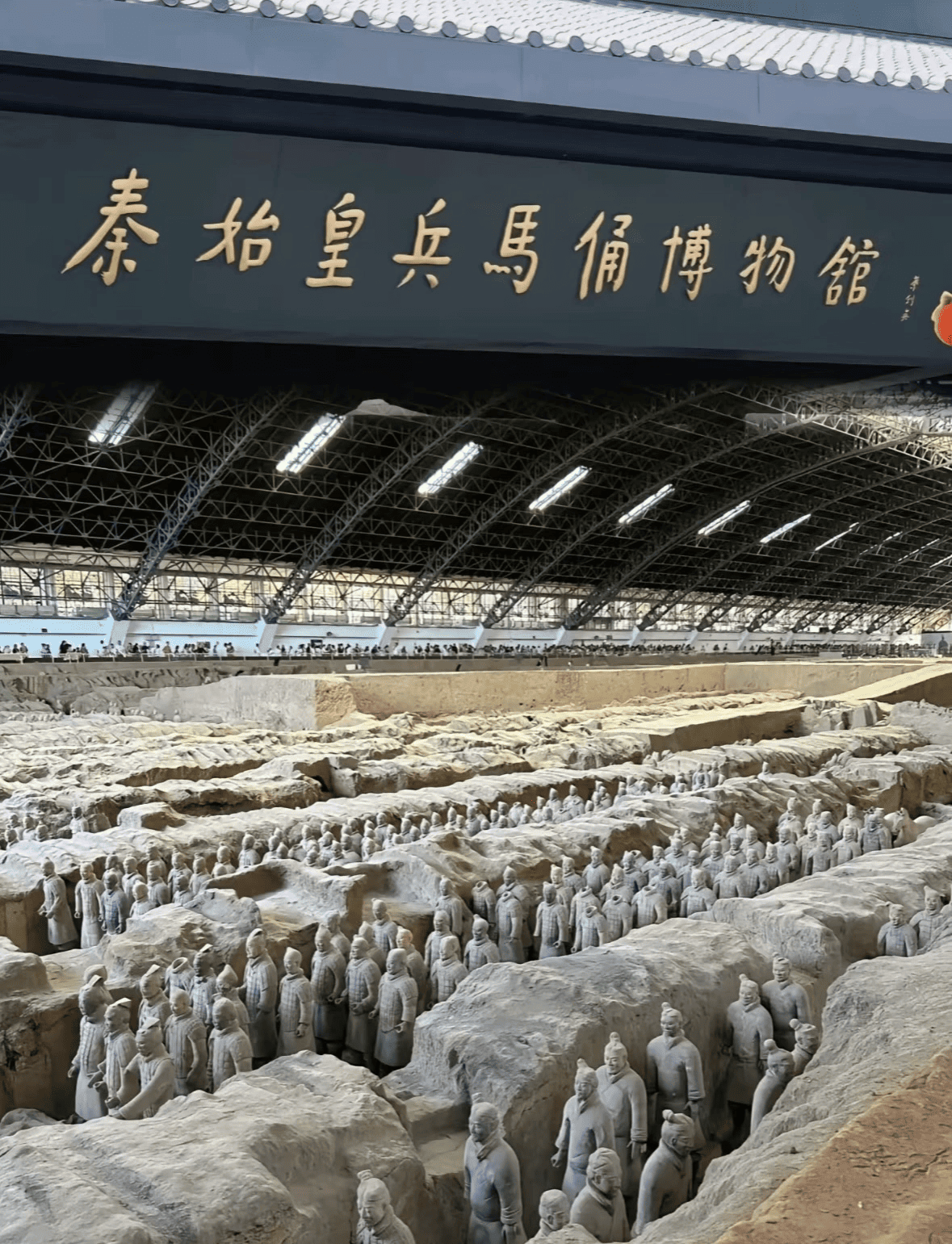
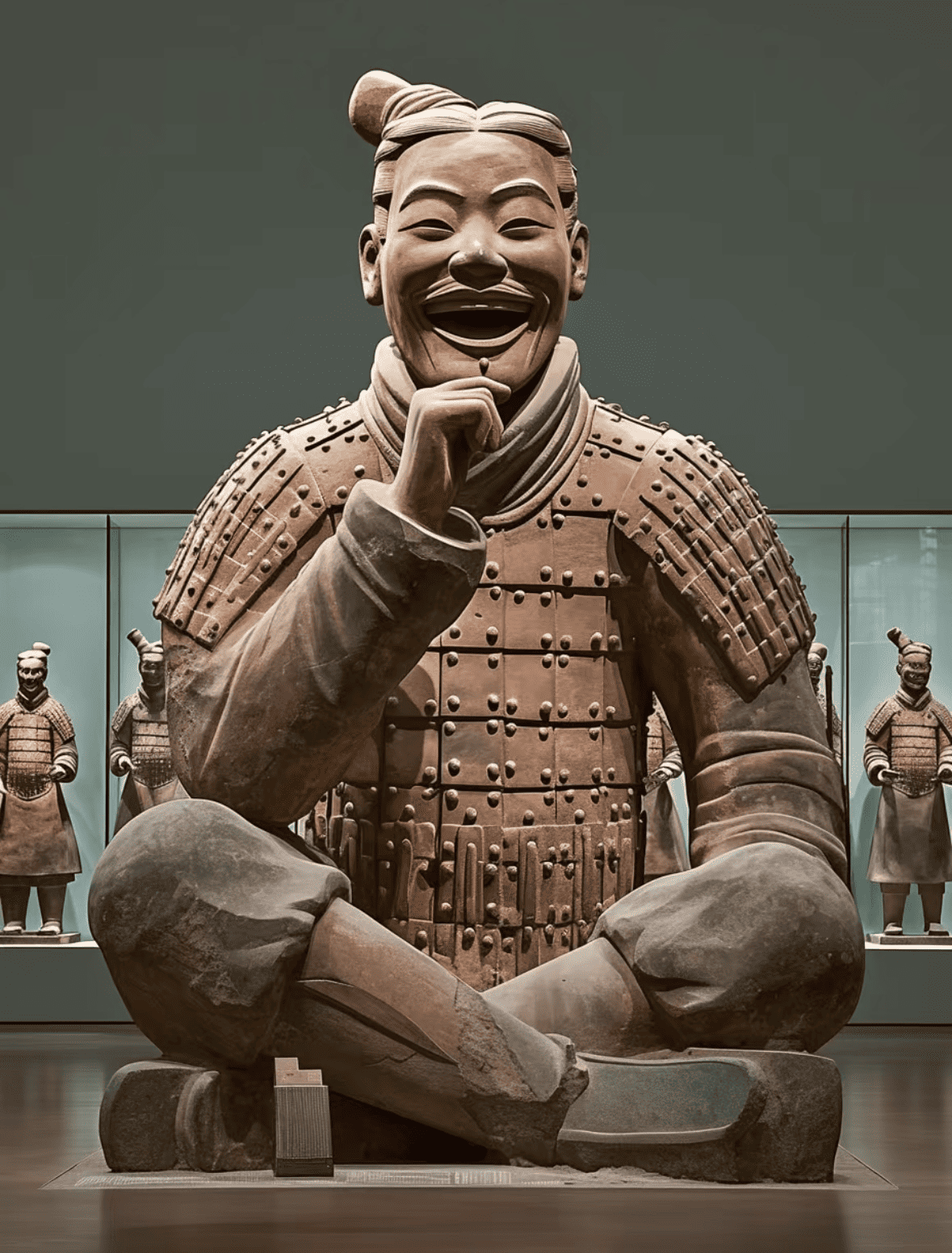
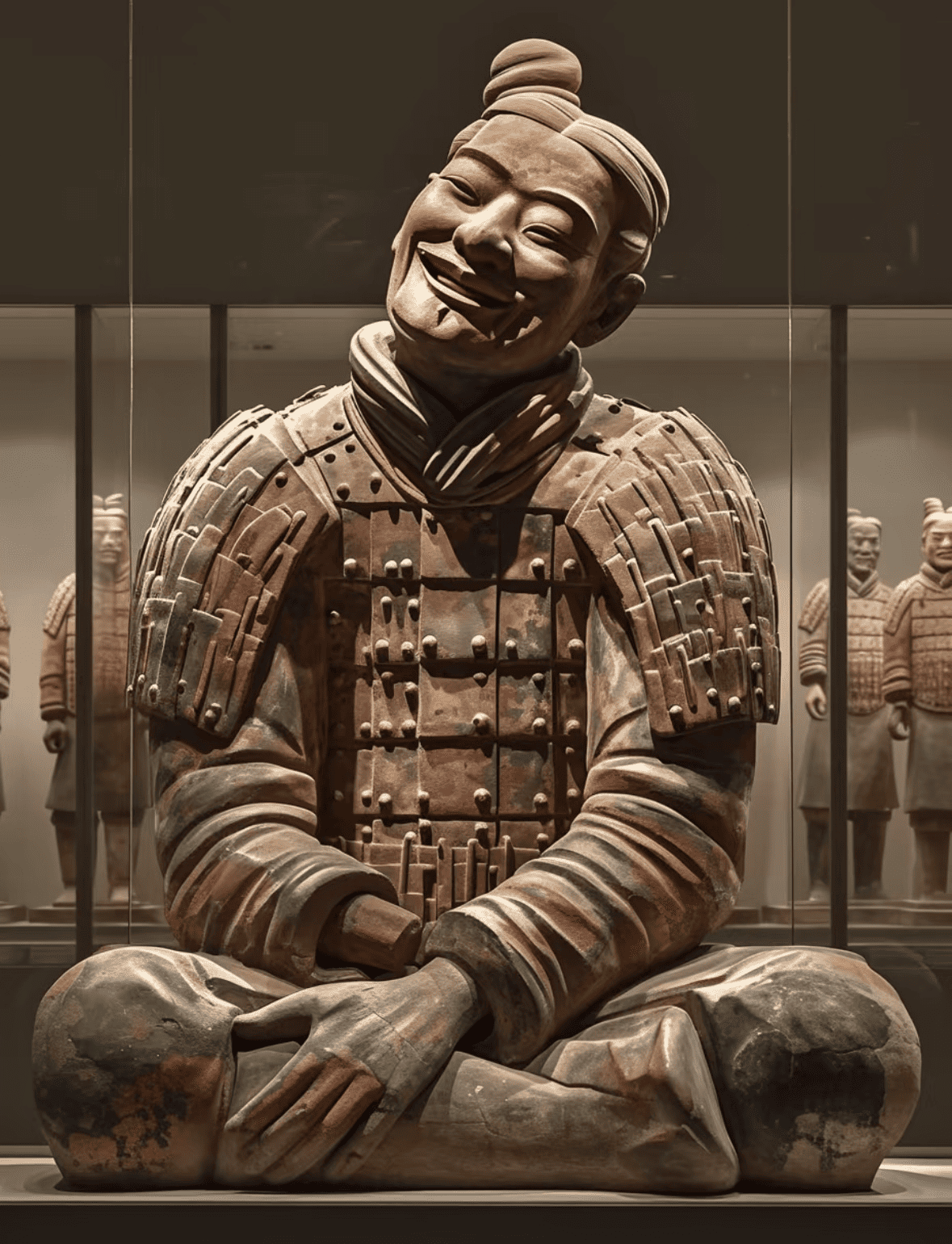
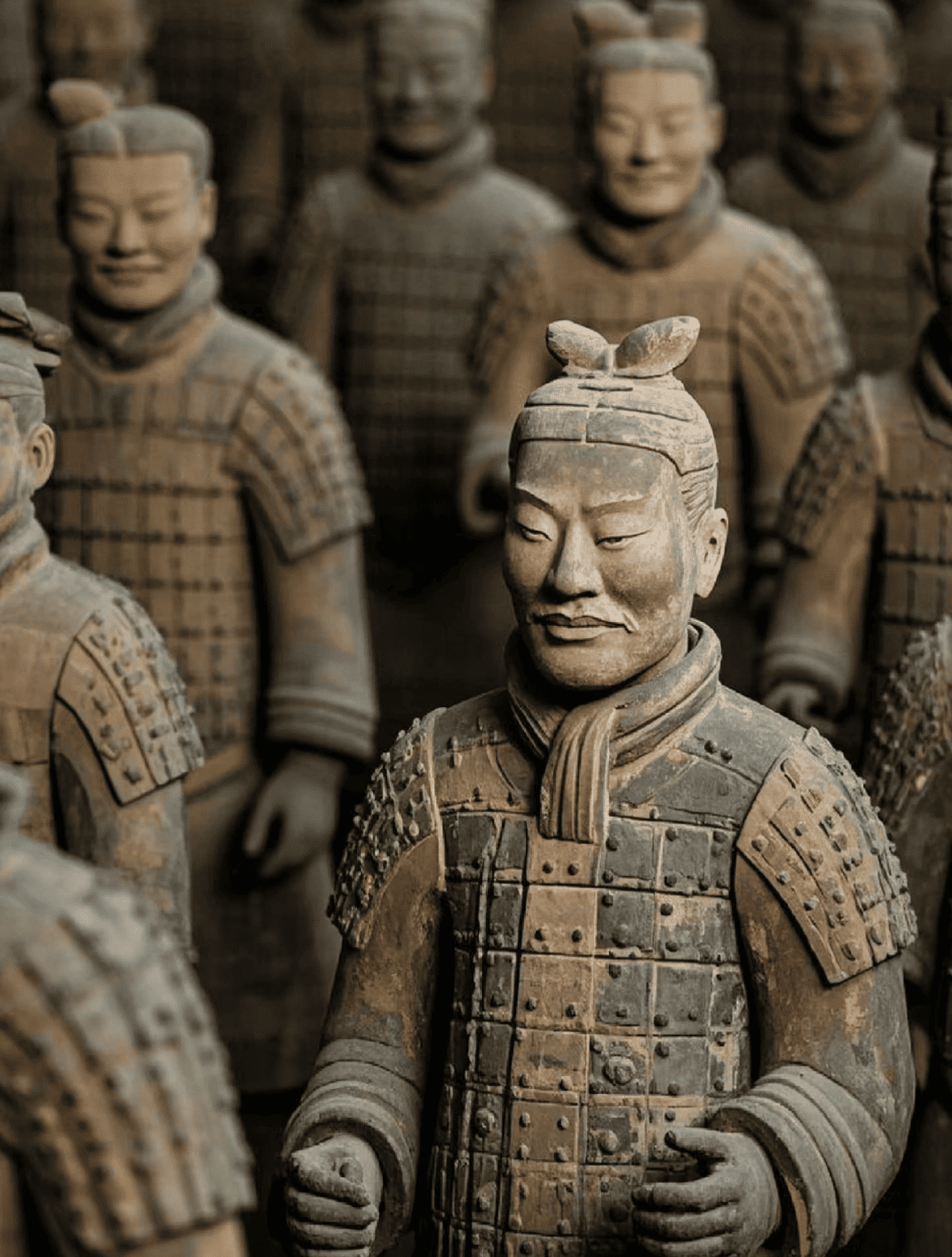
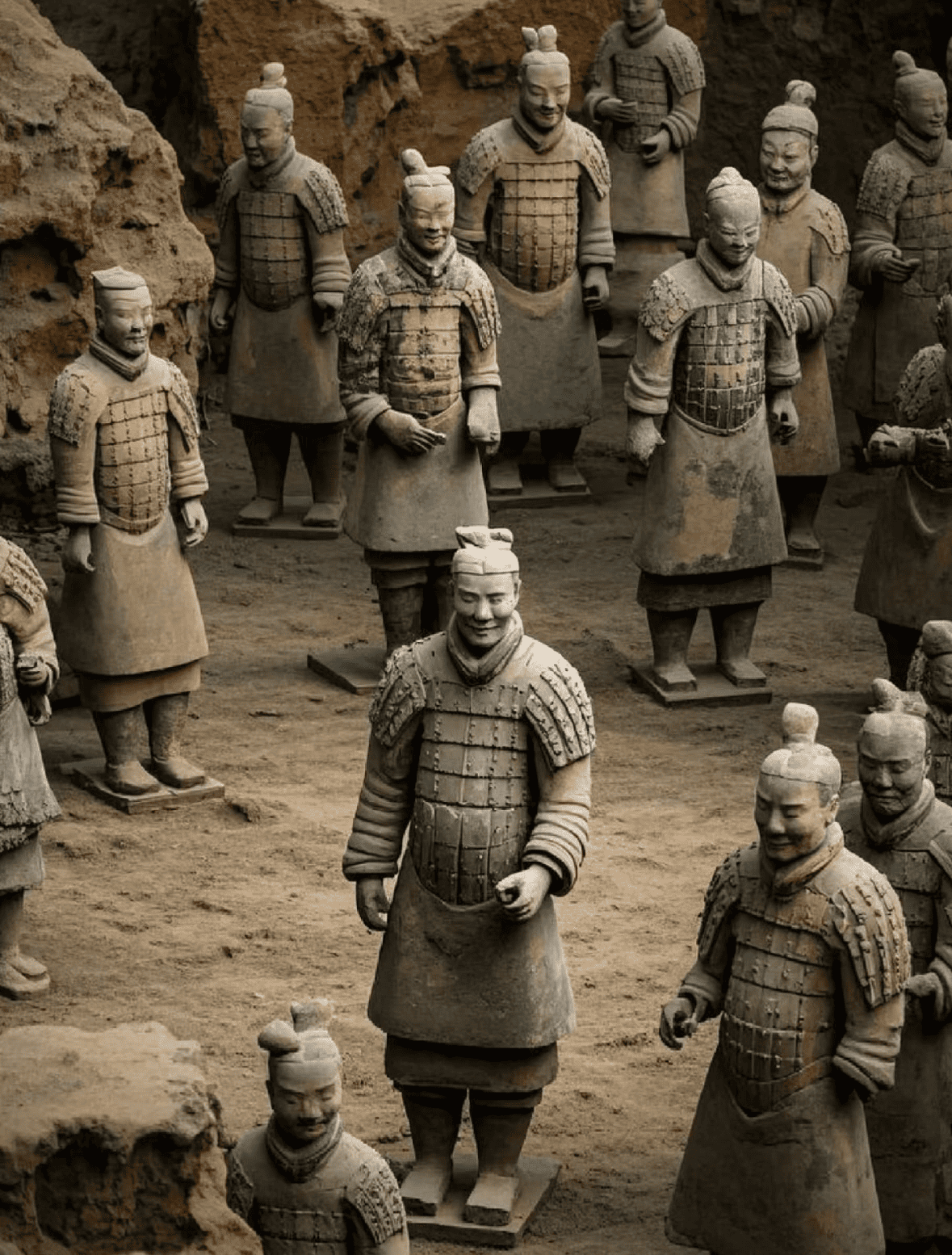
After lunch at noon, we will visit the Museum of the Mausoleum of the First Qin Emperor, which has the reputation of "the eighth wonder of the world" and has stood underground for two thousand years (the tour lasts about 2 hours and 30 minutes, and the scope of the tour is 1/2/3 pit). The Huangdi Mausoleum Museum at the beginning of Qin Dynasty is a large-scale site museum based on the Terracotta Warriors and Horses Museum and the Mausoleum Site Park of Qin Shihuang. Among them, the unearthed pottery figurines are different in image and vivid in expression, which is a pearl in the history of ancient sculpture art in China, and is known as "the eighth wonder in the world" and "one of the great discoveries in the archaeological history of the 20th century".
= = = Terracotta Warriors, the essence of which is as follows = = =
√ No.1 Pit of Terracotta Warriors: No.1 Burial Pit is the largest pit of Terracotta Warriors discovered in the Qin Mausoleum at present. It is an east-west rectangle with a length of 230 meters and a width of 62 meters, with a total area of 14,260 square meters, which is equivalent to two football fields. Here are the chariots and infantry formations of the Qin Dynasty. According to the trial excavation, more than 6,000 pieces of pottery figurines and horses are buried (voluntarily choose to ride at your own expense, and the battery car of the Terracotta Warriors and Horses will go to the No.1 pit, one-way 5 yuan/person).
√ No.2 Pit of Terracotta Warriors: No.2 Burial Pit is located in the northeast of No.1 Pit, which is an underground civil structure building with a square foot shape and a total area of about 8,000 square meters. There are more than 1,400 pottery figurines and horses buried in the pit, 89 chariots, 116 cavalry pommel horses and tens of thousands of bronze weapons.
√ No.3 Pit of Terracotta Warriors: No.3 Pit is located on the north side of the western end of No.1 Pit, opposite to No.2 Pit from east to west, with an area of about 520 square meters, and the whole pit is concave. From the internal layout, it is the headquarters of pits 1 and 2, and it is the earliest image data of military headquarters in the world archaeological history.
√ 50th Anniversary Special Exhibition Hall: It is a large-scale archaeological achievement exhibition to commemorate the 50th anniversary of the discovery of Qin Terracotta Warriors and Horses. It presents the scale, structure and cultural connotation of Qin Shihuang Mausoleum in an all-round way through 8 thematic units and 230 precious cultural relics. Based on archaeological discoveries, combined with modern technologies such as digital interaction and site scene restoration, the exhibition systematically shows the mausoleum system, military system and court life of the mausoleum of the First Qin Emperor.
√ Tips: After the trip, we will switch cars according to different performances, and there will be waiting during the trip. After the return trip, please choose one of the three places (near the Bell Tower, Yongxingfang and Datang City that Never Sleeps). In case of traffic jams, holidays and traffic control, you need to go to Datang City that Never Sleeps by yourself. Please forgive me.
Punching in at night [Datang City that Never Sleeps] is the only large-scale imitation Tang building complex pedestrian street in China with the prosperous Tang culture as the background. There are four major squares here, such as Xuanzang Square, which is positioned as the theme square of Buddhist culture, Zhenguan Square, which embodies the dominance of the Tang Dynasty, and Kaiyuan Square, which is the climax of the landscape. On the central sculpture landscape pedestrian street of the Central Axis Landscape Avenue, there are nine groups of theme group sculptures, such as "Zhenguan Governance" and "Kaiyuan Shengshi", which show the weather of a big country. The city that never sleeps perfectly integrates the culture of the prosperous Tang Dynasty with modern commerce, leisure and entertainment. It is a new business card for cultural tourism in Xi 'an, allowing tourists to travel back to the prosperous Tang Dynasty, enjoy the night scene by themselves, and then return to the hotel.


